
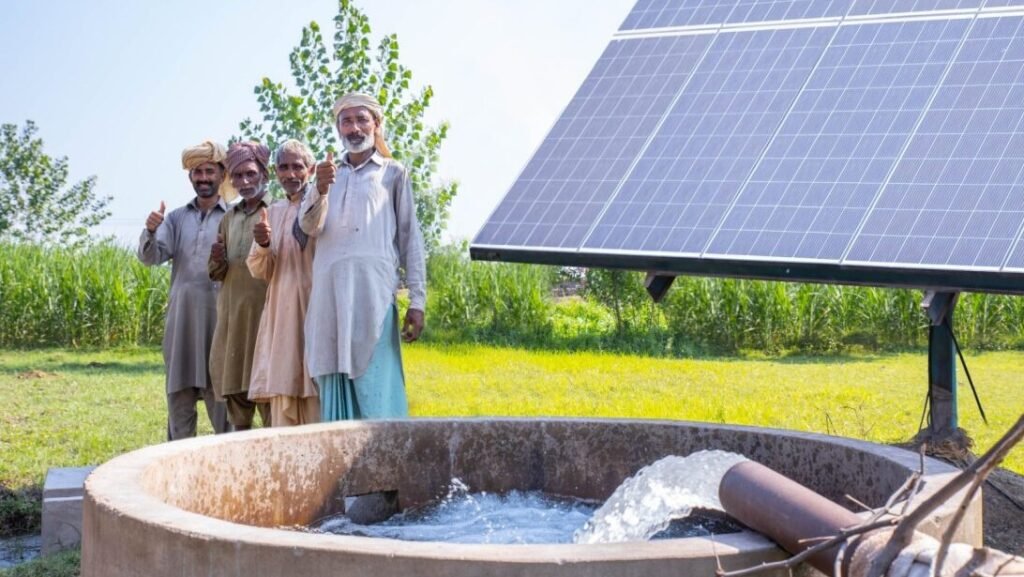
For farmers, electricity is no longer just a utility expense—it can be a major part of the cost of producing food. Irrigation pumps, dairy equipment, refrigeration, ventilation, grain handling, lighting, and processing systems can consume substantial amounts of power.
That is why solar-powered farming is gaining attention. By generating electricity from sunlight, farmers can reduce their dependence on grid electricity and diesel-powered equipment while building a more predictable farm energy system.
But can solar actually lower electricity costs enough to justify the investment? For many farms, the answer can be yes—particularly when solar is designed around high-energy operations such as irrigation.
How Solar Energy Works on a Farm
A farm solar system typically uses photovoltaic (PV) panels to convert sunlight into electricity. The electricity can then operate farm machinery, pumps, refrigeration units, fans, lighting, and other equipment.
USDA research notes that on-farm solar electricity can be used for irrigation pumps, refrigeration, processing equipment, and other agricultural applications. ([ARS][1])
Farmers can use several configurations:
- Grid-connected solar: Solar powers farm equipment while the utility remains available when production is low.
- Off-grid solar: Panels provide electricity without relying on a conventional grid connection.
- Solar water pumping: Solar electricity directly powers irrigation or livestock water pumps.
- Solar plus battery storage: Batteries store excess generation for later use.
- Solar plus water storage: Farmers can pump water during sunny periods and store it in tanks or reservoirs for later irrigation.
The right system depends on farm size, electricity demand, water requirements, sunlight availability, and local utility rules.
Solar Irrigation Can Make the Biggest Difference
For many agricultural operations, irrigation electricity costs are an important target for solar conversion.
Water pumps can operate for long periods during the growing season, creating a predictable energy demand. Solar generation can match a significant portion of this daytime requirement.
USDA’s 2023 Irrigation and Water Management Survey recorded 6,386 solar-powered pumps across 3,278 U.S. farms, covering more than 302,000 irrigated acres. ([NASS Data][2])
This does not mean every farm should immediately replace its existing pump. Pump size, well depth, water flow, irrigation pressure, crop requirements, and solar resource all affect the economics.
A properly designed system, however, can substantially reduce the amount of electricity purchased from the grid.
Can Farmers Really Reduce Electricity Bills?
The biggest advantage of solar is that sunlight has no fuel bill.
Once a photovoltaic system is installed, generating electricity from sunlight does not require purchasing additional fuel. This can protect farmers from rising electricity and energy prices.
However, solar power is not free to install. Farmers must consider:
- Solar panels
- Inverters and controllers
- Mounting structures
- Wiring and electrical equipment
- Pumping equipment
- Batteries, if required
- Installation and labor
- Maintenance
- Financing costs
Therefore, the important question is not simply “Does solar produce cheap electricity?” but rather:
“How quickly will the solar investment recover its cost through energy savings?”
The answer depends on the farm’s electricity consumption and the cost of its existing energy supply.
Solar Power Can Reduce More Than Electricity Costs
Solar farming can provide benefits beyond a lower monthly power bill.
Lower Operating Expenses
Replacing purchased electricity with on-site solar generation can reduce recurring energy expenses. USDA’s Natural Resources Conservation Service identifies improved energy efficiency and reduced input costs as potential benefits of on-farm energy improvements. ([Natural Resources Conservation Service][3])
Less Dependence on Diesel
Solar water pumps can also provide an alternative to diesel-powered pumping in suitable locations. This can reduce fuel purchasing, transportation, and some maintenance requirements.
More Predictable Energy Costs
Electricity prices can change, while sunlight itself does not come with a monthly fuel charge. A solar installation can therefore provide greater long-term energy-cost predictability.
Power for Remote Farms
Solar pumping can be particularly useful where extending an electricity connection is expensive or unreliable. Stand-alone solar pumping has been researched for remote agricultural and livestock applications by USDA agricultural scientists. ([ARS][4])
Solar Farming Is Not Automatically Cheap
One of the biggest mistakes farmers can make is assuming that installing more solar panels will automatically produce bigger savings.
The system must be correctly sized.
A farmer should first calculate:
- Current electricity consumption
- Pump horsepower or motor capacity
- Daily water requirement
- Operating hours
- Peak electricity demand
- Local solar availability
- Existing electricity and fuel costs
- Equipment and installation costs
- Expected maintenance expenses
- Financing and available incentives
A professional farm energy audit can help identify where electricity is being consumed and where efficiency improvements should come before installing solar. USDA’s NRCS On-Farm Energy Initiative supports energy assessments that establish an energy-use baseline and identify efficiency opportunities. ([Natural Resources Conservation Service][3])
What About Solar Batteries?
Batteries sound attractive because they allow farmers to store daytime solar power for nighttime operations.
However, batteries add significant equipment costs and require additional maintenance and replacement planning.
For irrigation, farmers may have another option: store water instead of electricity.
A solar pump can operate during strong sunlight, fill a storage tank or reservoir, and allow irrigation water to be used later. USDA NRCS guidance notes that a storage tank can be an efficient way to store the energy used for solar pumping rather than relying on batteries in some applications. ([Natural Resources Conservation Service][5])
This approach can be particularly useful for farms with predictable irrigation schedules.
Agrivoltaics: Producing Food and Solar Energy Together
A newer concept is agrivoltaics, where agricultural production and solar generation share the same land.
Solar panels can be positioned above crops or livestock areas while farming activities continue underneath or between the structures. USDA research has examined solar arrays designed to allow tractors, farm equipment, and livestock to operate around or beneath elevated panels. ([ARS][1])
Agrivoltaics can potentially create another revenue or cost-saving opportunity, but the design must account for crop sunlight requirements, machinery access, panel spacing, water management, and land economics.
What Farmers Should Do Before Installing Solar
Solar should begin with numbers—not assumptions.
Farmers should compare the total lifetime cost of the existing energy system with the projected cost of solar.
For example, if a farm spends heavily on irrigation electricity every year, reducing that recurring expense could make solar more attractive. But a farm with very low electricity consumption may take much longer to recover the installation cost.
Farmers should also investigate local renewable-energy incentives, agricultural financing programs, utility policies, and grid-connection requirements before making a purchase.
The Bottom Line
Solar-powered farming can reduce electricity costs, especially on farms with substantial daytime electricity demand, irrigation pumping, refrigeration, or remote water systems.
The technology is already being used in U.S. agriculture, and USDA data confirms that thousands of farms operate solar-powered pumps. ([NASS Data][2])
For farmers in Pakistan and other sunny agricultural regions, solar can be particularly compelling because abundant sunlight can be converted into electricity for irrigation and farm operations.
But solar is not a one-size-fits-all solution. System sizing, pump efficiency, water management, installation costs, financing, maintenance, and electricity rates determine whether the investment makes financial sense.
The smartest approach is to calculate current energy costs first, improve inefficient equipment where possible, and then design a solar system around the farm’s actual energy and water requirements.
For modern agriculture, the goal is not simply to produce more food—it is to produce it more efficiently, sustainably, and profitably. Solar energy can be an important part of that transition.