
Pakistan’s agriculture has traditionally measured success in tons of wheat, rice, sugarcane and cotton, export earnings and cultivated acreage. But that approach is becoming increasingly outdated.
For a country facing growing water stress, the more important question is not simply how much Pakistan can grow. It is how much water each crop consumes—and whether that water will still be available for farmers in the future.
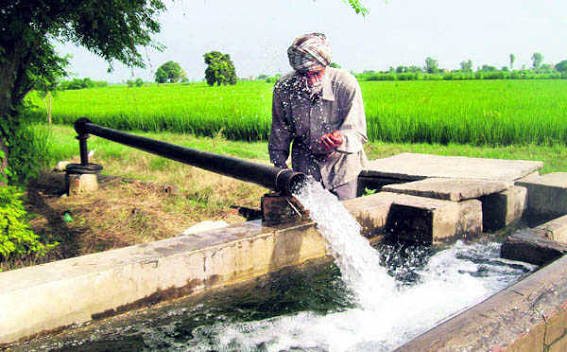
Agriculture remains heavily dependent on irrigation, while groundwater has become a critical buffer when canal supplies and rainfall fall short. The World Bank says groundwater provides more than half of Pakistan’s agricultural water and warns that over-abstraction, waterlogging and contamination are threatening this resource. ([World Bank][1])
For Pakistan, the future of farming may therefore depend on one principle: grow crops according to available water, not simply according to market demand.
Pakistan’s Agricultural Crisis Is Also a Water Crisis
Pakistan has one of the world’s largest irrigation systems, but water availability is becoming a serious constraint on agricultural growth.
The problem is not that farmers are using water unnecessarily. Farmers need water to produce food and earn an income. The deeper problem is that agricultural incentives often fail to reflect the real scarcity value of water.
A recent World Bank assessment notes that Pakistan’s water governance provides weak incentives for conservation, while crop-specific support and inadequate groundwater regulation can encourage water-intensive production and groundwater extraction. ([World Bank][2])
This creates a dangerous cycle:
More irrigation → more production → greater groundwater pumping → declining water security → higher future farming costs.
That is not a sustainable agricultural model.
Groundwater Is Pakistan’s Hidden Agricultural Bank
For millions of farmers, groundwater acts like an emergency savings account.
When canal water is insufficient, a tubewell can provide the additional irrigation needed to protect a crop. Groundwater has therefore played a major role in expanding agricultural productivity and stabilizing farm production.
But an aquifer is not an unlimited resource.
The World Bank has warned that over-exploitation is already affecting parts of Pakistan’s irrigated agricultural landscape, while poor groundwater governance and limited data make sustainable management more difficult. ([World Bank][1])
This means Pakistan needs to start treating groundwater as natural capital, not as free water.
Every agricultural policy should consider:
- How much water is available?
- How quickly is groundwater being recharged?
- Which crops consume the most water?
- How much water does each crop require per hectare?
- How much economic value does each cubic meter generate?
- Is the crop being produced for domestic consumption or export?
These questions could fundamentally change Pakistan’s farming strategy.
Solar Tubewells Are Not the Real Problem
The rapid adoption of solar irrigation has created concern about groundwater depletion. But blaming solar pumps alone misses the larger issue.
Farmers turned toward solar energy because electricity and diesel irrigation can be expensive and unreliable. Solar-powered tubewells can reduce operating costs and give farmers greater control over irrigation.
The problem occurs when cheap pumping meets unrestricted groundwater extraction.
The World Bank has similarly highlighted how improved access to groundwater can create a risk of over-extraction when water use is not properly monitored. ([World Bank Blogs][3])
Therefore, Pakistan should not simply ban solar pumps.
Instead, policymakers should regulate how much water is pumped.
That could include tubewell registration, groundwater monitoring, smart metering, aquifer-level extraction limits and incentives for water-efficient irrigation.
Sugarcane Shows Why Crop Economics Matter
Sugarcane illustrates the complicated relationship between agricultural profitability and water sustainability.
The crop can provide attractive returns under suitable conditions, but it also requires substantial irrigation and occupies farmland for a relatively long growing period.
When water-stressed regions continue expanding water-intensive crops, farmers may benefit in the short term while the wider economy carries the long-term environmental cost.
The issue becomes even more important when agricultural commodities are exported.
An export is not only a shipment of sugar, rice or cotton. It also represents the water, energy, fertilizer, land and labor used to produce that commodity.
Pakistan therefore needs to understand its agricultural exports through the concept of virtual water—the water embedded in traded agricultural products.
Rice Exports: Economic Success With a Water Question
Rice demonstrates why export performance alone cannot define agricultural success.
Pakistan experienced a major increase in rice exports during FY2023-24. Official Pakistan Bureau of Statistics data show that exports of non-basmati rice alone were worth about $3.06 billion, with shipments exceeding 5.25 million tonnes. Basmati rice exports added another $877 million. ([Pakistan Bureau of Statistics][4])
These figures represent an important source of foreign exchange.
But there is another side to the story.
If rice production expands in areas where groundwater is already under pressure, policymakers need to calculate the blue-water footprint behind those exports.
In other words:
How many cubic meters of scarce surface and groundwater are required to generate one dollar of agricultural export revenue?
That metric could become far more useful than production volume alone.
Rice can remain an important Pakistani crop. But its expansion should depend on local water availability, irrigation efficiency, crop productivity and groundwater conditions.
Water Efficiency Alone Will Not Solve the Problem
Pakistan has invested in technologies such as laser land leveling, drip irrigation, sprinklers and improved irrigation practices.
These technologies can significantly improve farm-level water management.
But there is an important catch.
If a farmer saves water on one acre and then uses that saving to cultivate another acre of a thirsty crop, the farmer may become more efficient while the overall basin continues consuming the same amount—or more—water.
This is known as the difference between field-level efficiency and basin-level water savings.
Pakistan therefore needs to move beyond simply asking:
How much water did the farmer save?
The better question is:
How much water did the entire watershed or aquifer actually save?
That distinction is essential for sustainable irrigation management.
Pakistan Needs Hydrological Crop Zoning
The solution is not to label one crop universally “good” and another universally “bad.”
Instead, Pakistan should adopt hydrological zoning.
Different agricultural regions have different rainfall patterns, soil conditions, canal supplies, groundwater quality and recharge rates. Crop planning should reflect those differences.
Southern Punjab
Southern Punjab can strengthen crops that provide strong economic returns without putting excessive pressure on already stressed water resources. Cotton, oilseeds, pulses and carefully selected horticultural crops can play a larger role where local conditions support them.
Central Punjab
Areas experiencing groundwater stress should avoid uncontrolled expansion of water-intensive crops. Paddy production should increasingly depend on local water availability and sustainable irrigation practices.
Sindh
Sindh requires greater attention to drainage, salinity, waterlogging and groundwater quality. The World Bank notes that waterlogging remains a significant challenge within the Indus Basin, particularly in Sindh. ([World Bank][1])
Thal and Potohar
Drier regions should emphasize crops capable of performing under variable water conditions, including pulses, gram, oilseeds and suitable drought-tolerant crops.
Lower Sindh and the Indus Delta
Environmental flows must be included in agricultural water planning. Water reaching downstream ecosystems is not simply “unused water.” It supports ecological health and helps protect coastal areas from saltwater intrusion.
Farmers Need Better Incentives, Not Just Restrictions
Farmers cannot simply be told to stop growing a profitable crop.
If the government wants farmers to switch from water-intensive agriculture to alternative crops, those alternatives must have reliable markets, competitive prices, storage facilities, processing capacity and supply-chain support.
Pakistan could introduce:
- Crop-specific water pricing
- Groundwater extraction limits
- Tubewell registration and monitoring
- Water-efficient irrigation subsidies
- Climate-smart farming incentives
- Support for pulses and oilseeds
- High-value, lower-water horticulture
- Better agricultural storage and cold chains
- Crop insurance for alternative crops
- Digital water monitoring using satellites and remote sensing
Punjab’s existing efforts to improve water-use efficiency show that technology and farmer incentives can work together. The World Bank has supported programs focused on climate-smart agriculture, water conservation and improved productivity among small farmers. ([World Bank][5])
The New Measure of Agricultural Success
Pakistan should gradually move away from measuring agricultural success only through production volume.
A better national metric would be:
Economic value generated per unit of consumptive blue water.
This would change the way policymakers evaluate crops.
A crop producing enormous tonnage may not necessarily be the most valuable crop if it consumes scarce groundwater and generates relatively little economic value.
Conversely, a high-value crop using less water could generate greater income while placing less pressure on the country’s aquifers.
This is the foundation of water productivity—producing more economic value from every unit of water.
Pakistan Does Not Need Less Agriculture—It Needs Smarter Agriculture
Pakistan’s farmers are not the enemy of water conservation. They are among the first people affected when groundwater declines, irrigation costs increase, canals run short and droughts intensify.
The real challenge is designing an agricultural economy that aligns farmer profitability with water sustainability.
Pakistan must know where water is available, where aquifers are declining and which crops generate the greatest economic return from scarce water.
The goal should not be to grow less food.
It should be to grow the right crops, in the right places, with the right irrigation technology, for the right markets.
Pakistan’s future agricultural question is therefore much bigger than wheat, rice, sugarcane or cotton production.
It is this:
How much can Pakistan grow today without using tomorrow’s water to pay for today’s harvest?
For a water-stressed Pakistan, answering that question may be the most important agricultural reform of the next decade. ([World Bank][2])
The Source of this news is Profit.