
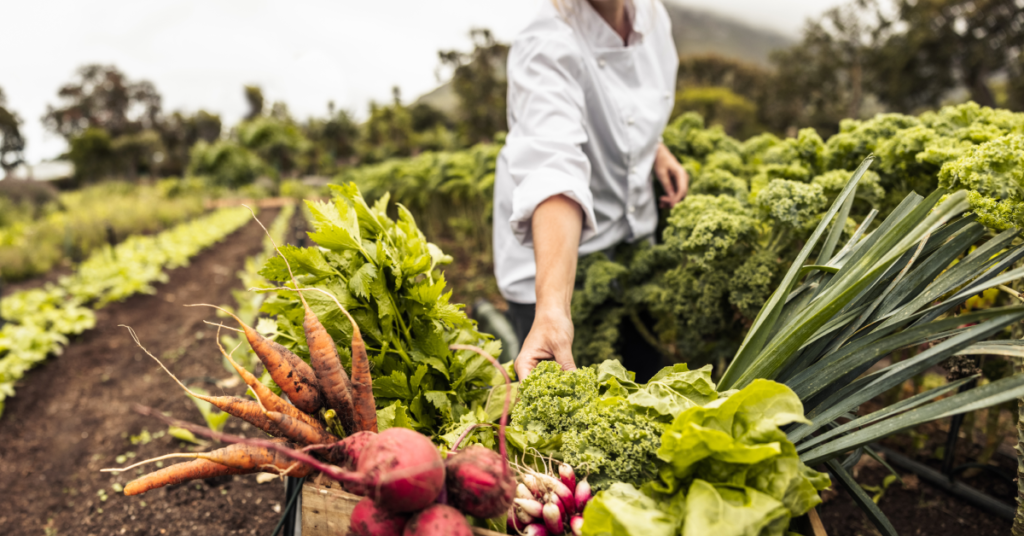
For small farmers, growing the same traditional crops every season can limit income potential. Rising input costs, water shortages, changing weather patterns, and unpredictable commodity prices are pushing farmers to explore high-value crops that can generate greater returns from limited land.
The good news is that small farms do not always need more acres to become more profitable. In many cases, the better strategy is to grow higher-value produce, improve productivity, reduce resource waste, and sell directly to better-paying markets.
Pakistan’s agricultural institutions are increasingly promoting crop diversification and high-value agriculture. Punjab’s current agricultural programs, for example, specifically support high-value crops, efficient irrigation, and diversification of agricultural value chains.
But which crops are worth considering?
Here are some of the best high-value crops for small farmers in Pakistan.
1. Vegetables
Vegetables can be an attractive option for farmers with limited land because many varieties have relatively short production cycles and can be planted more than once depending on the region.
Potential crops include:
- Tomatoes
- Chilies
- Capsicum
- Cucumbers
- Carrots
- Onions
- Okra
- Bitter gourd
- Spinach
- Coriander
Punjab’s Agriculture Department lists numerous vegetable varieties adapted to different growing seasons and irrigated areas, including onion, brinjal, coriander, spinach, okra, carrot, cucumber, turmeric, and several gourds.
For small farmers, the opportunity becomes stronger when vegetables are sold directly to restaurants, retailers, supermarkets, processors, or local consumers rather than relying entirely on wholesale markets.
2. Chilies
Chili farming can be an interesting high-value crop opportunity because chilies can be sold fresh or processed into dried chilies, flakes, powder, sauces, and other products.
Value addition can significantly change the economics of a crop.
Instead of selling everything immediately after harvest, farmers can explore properly managed drying, grading, packaging, and direct marketing where food-safety and market requirements are met.
Farmers should select varieties according to local climate, disease pressure, water availability, and buyer requirements.
3. High-Value Fruits
Fruit production can generate strong returns, but it usually requires greater patience than annual vegetables.
Depending on the region, farmers can consider:
- Mango
- Guava
- Pomegranate
- Citrus
- Grapes
- Figs
- Dates
- Avocado
- Berries
- Peaches
Punjab’s agricultural research programs are actively evaluating and promoting high-value fruit crops, including grapes, figs, avocado, blackberries, citrus, and other fruit varieties for suitable areas.
The important word is suitable.
A crop that performs exceptionally well in one district may fail economically in another because of temperature, water, soil, disease, or market conditions.
4. Dates
Date palm farming can provide a long-term opportunity in suitable hot and dry regions.
Pakistan already has an established date industry, while Punjab’s Agriculture Department has been testing high-value varieties such as Ajwa, Medjool, Khalas, Amber, and Barhee as part of a high-value horticulture initiative.
Premium varieties can potentially achieve better market positioning than ordinary fruit, particularly when farmers focus on quality, grading, packaging, and branding.
However, date palms are a long-term investment, so farmers should not expect immediate returns.
5. Grapes
Grape farming is another crop worth considering in areas with appropriate growing conditions.
Punjab’s BARI has evaluated grape varieties for the Potohar and rainfed regions. Its published information includes varieties such as Sultanina-C, Vitro Black, and Sugra-1.
Grapes can create additional income opportunities through fresh-market sales and, depending on regulations and market demand, value-added products.
Successful production requires suitable varieties, trellising, pruning, irrigation management, pest control, and careful harvesting.
6. Figs
Figs are increasingly attracting attention as a high-value fruit crop because of their premium positioning and potential for fresh and dried markets.
Punjab’s BARI reports the release of a Black Ball fig variety for the Potohar region and adjoining plain areas, describing it as early maturing and suitable for the region.
Figs can also be marketed in different forms, including fresh fruit and properly processed dried products.
For small farmers, this creates an opportunity to focus on quality rather than simply production volume.
7. Olive
Olive farming in Pakistan is particularly relevant for farmers in suitable rainfed and semi-arid regions.
Olives can provide multiple revenue opportunities because farmers can sell fruit for processing and potentially produce olive oil and other value-added products.
Punjab’s current agricultural initiatives include olives among the high-value crops being promoted in the Potohar region, alongside water-efficient irrigation and solar-powered lift irrigation.
BARI also provides olive oil extraction services and promotes value-added olive products, giving farmers opportunities to move beyond raw fruit sales.
The main drawback is time: an olive orchard requires patience before reaching commercially meaningful production.
8. Medicinal and Aromatic Plants
Small farmers can also investigate medicinal plants and aromatic crops, especially where local buyers or processors are available.
Potential options include:
- Fennel
- Psyllium
- Nigella
- Stevia
- Tulsi
- Linseed
- Selected aromatic herbs
Punjab’s Agriculture Department specifically identifies medicinal plants and spices such as quinoa, stevia, fennel, psyllium, nigella, carom, tulsi, and linseed as alternative high-value crops for research and development.
These crops can be attractive because some require comparatively modest water inputs and can diversify farm income. Research initiatives in Potohar also highlight medicinal and aromatic plants as potential options for less-productive soils and income diversification.
9. Strawberries and Other Specialty Berries
Specialty fruits can command premium prices when farmers can consistently deliver good quality.
Strawberries, blackberries, and other berries can appeal to urban consumers, restaurants, bakeries, supermarkets, and food businesses.
Punjab’s agricultural research institutions are studying high-value berries and other specialty fruit crops for suitable areas.
However, small farmers should research the market before planting. Premium crops can also have higher post-harvest and transportation risks because many berries are highly perishable.
10. Ginger and Specialty Crops
Ginger is another high-value crop being promoted in specific agricultural development programs.
Punjab’s Potohar transformation project includes ginger, olives, groundnut, and other high-value crops while also promoting efficient irrigation and farmer training.
Specialty crops can give small farmers an opportunity to diversify away from conventional commodities, but profitability depends heavily on seed or planting material costs, yield, disease management, labor, and the final selling price.
How Small Farmers Can Increase Profit
Growing a high-value crop does not automatically mean making a high profit.
The real advantage comes from combining crop selection with efficient production and smart marketing.
Use Efficient Irrigation
Water management can have a major impact on profitability.
Drip and sprinkler systems can help farmers deliver water more precisely. Punjab’s current irrigation programs include subsidies for high-efficiency irrigation systems, with specific support for farmers growing orchards, vegetables, and other cash crops.
Improve Post-Harvest Handling
A farmer can produce an excellent crop and still lose money through poor handling.
Sorting, grading, packaging, cooling, transportation, and storage can significantly affect the final selling price.
Punjab’s agricultural profile has previously identified weak post-harvest handling, limited storage, and insufficient grading and packing as important constraints on farmer profitability.
Find the Buyer Before Planting
This is one of the most important rules for small farmers.
Before planting a high-value crop, identify:
Who will buy it? At what quality? At what time? At what approximate price?
Potential buyers include wholesalers, processors, supermarkets, restaurants, exporters, retailers, and direct consumers.
Start With a Small Trial
Don’t convert your entire farm to a new crop immediately.
Plant a small test area first and record:
- Seed or plant cost
- Fertilizer expenses
- Water consumption
- Labor
- Pest-control costs
- Yield
- Selling price
- Transportation
- Post-harvest losses
Then calculate the actual profit per acre.
Which High-Value Crop Is Best for You?
There is no single most profitable crop in Pakistan.
A small farmer near Lahore may have different opportunities from a grower in Potohar, Sindh, Balochistan, or Khyber Pakhtunkhwa.
Your decision should consider:
Climate + Soil + Water + Land Size + Crop Cycle + Market Access + Investment + Selling Price
For short-term cash flow, vegetables and selected specialty crops may be attractive. For long-term wealth creation, orchards such as olive, dates, grapes, figs, or other regionally suitable fruit crops may offer a different strategy.
Final Verdict
The best high-value crops for small farmers are not necessarily the crops with the highest market price. They are crops that match the farmer’s land, climate, water supply, skills, investment capacity, and access to profitable markets.
For Pakistan, promising options include high-value vegetables, chilies, grapes, figs, dates, olives, specialty berries, medicinal plants, ginger, and other regionally suitable horticultural crops.
The future of small-scale farming is increasingly about crop diversification, efficient irrigation, better varieties, value addition, and direct market access.
Instead of asking, “What crop has the highest price?”, farmers should ask a better question:
“Which high-value crop can I grow efficiently, sell reliably, and turn into the strongest profit from my available land?”
That shift—from simply growing crops to running agriculture as a business—can make a significant difference to the future of small farms in Pakistan.