
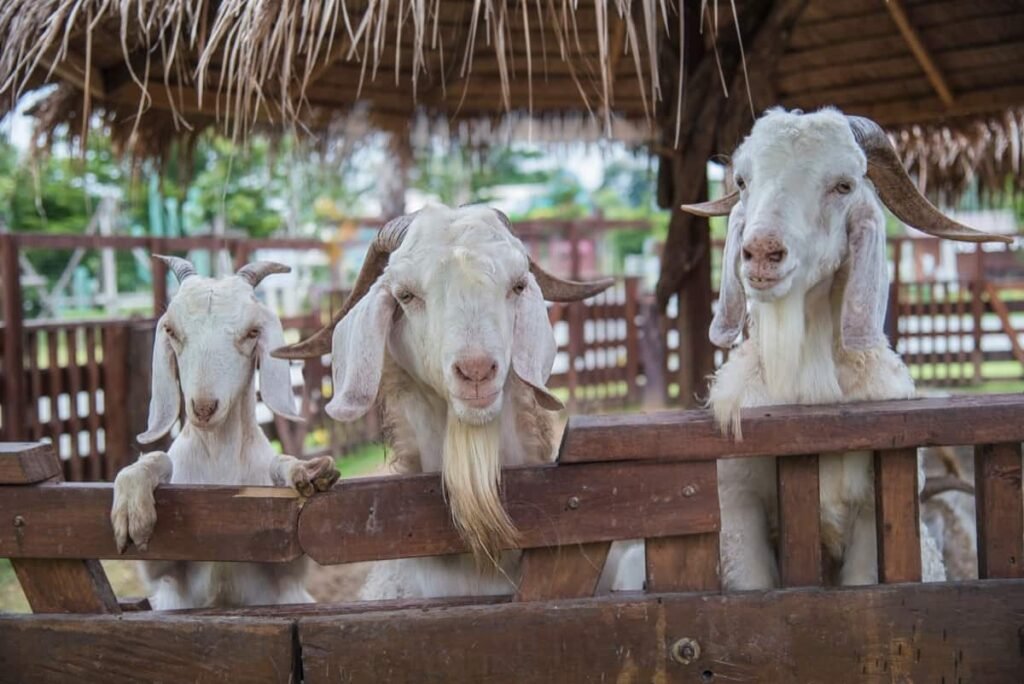
Starting a goat farm in Pakistan can cost anywhere from around PKR 500,000 for a small backyard operation to several million rupees for a commercial goat farm. The exact investment depends on the number of goats, breed, land, housing system, feed strategy, labor and whether you already own agricultural land.
Goat farming can be an attractive livestock business because goats require less space than cattle, can utilize different types of fodder and can generate income through meat goats, breeding animals, milk, manure and seasonal demand.
Pakistan has a large goat industry. According to the Pakistan Economic Survey 2025-26, the country’s estimated goat population reached 91.8 million animals, compared with 89.4 million in 2024-25. The government estimates goat milk production at 1.133 million tonnes and mutton production at 854,000 tonnes for 2025-26. ([Finance Division][1])
But how much money do you actually need to start?
This guide from PakFarming.com breaks down the major costs of starting a goat farm in Pakistan and explains how beginners can plan their investment.
Quick Answer: How Much Does a Goat Farm Cost in Pakistan?
A practical starting budget can look like this:
| Farm Size | Approximate Initial Investment |
|---|---|
| 10–15 goats | PKR 500,000–900,000 |
| 25 goats | PKR 900,000–1.6 million |
| 50 goats | PKR 1.7–3 million |
| 100 goats | PKR 3.5–6 million+ |
| 200+ goats | PKR 7 million–15 million+ |
These are planning estimates, not fixed market prices. Your actual investment can be substantially lower or higher depending on livestock quality, breed, land ownership, shed construction, feed availability and local market conditions.
If you already own land and can grow fodder, your startup cost can be much lower.
What Determines the Cost of a Goat Farm?
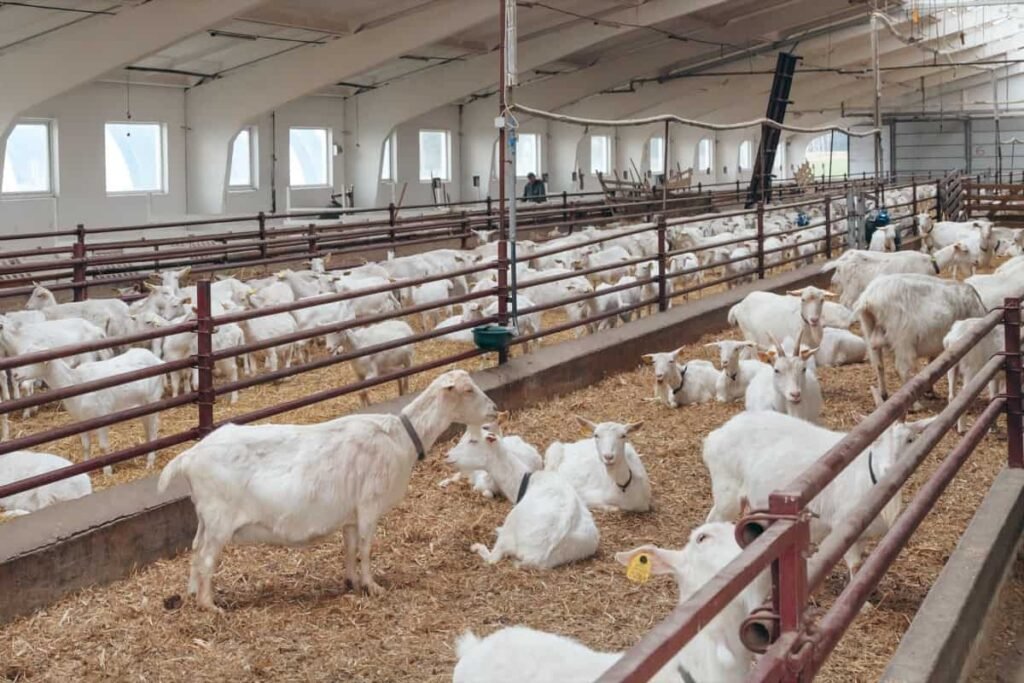
The total goat farming investment usually comes from several categories rather than one expense.
Your major costs include:
- Goats
- Goat shed
- Land
- Fencing
- Feed and fodder
- Water supply
- Labor
- Veterinary care
- Vaccinations
- Breeding
- Feeding equipment
- Transportation
- Electricity
- Farm management
- Emergency working capital
The animals themselves are often the largest initial expense, but beginners should not overlook recurring feed and healthcare costs.
A farm can have valuable goats but still lose money if the owner cannot control operating expenses.
1. Cost of Buying Goats
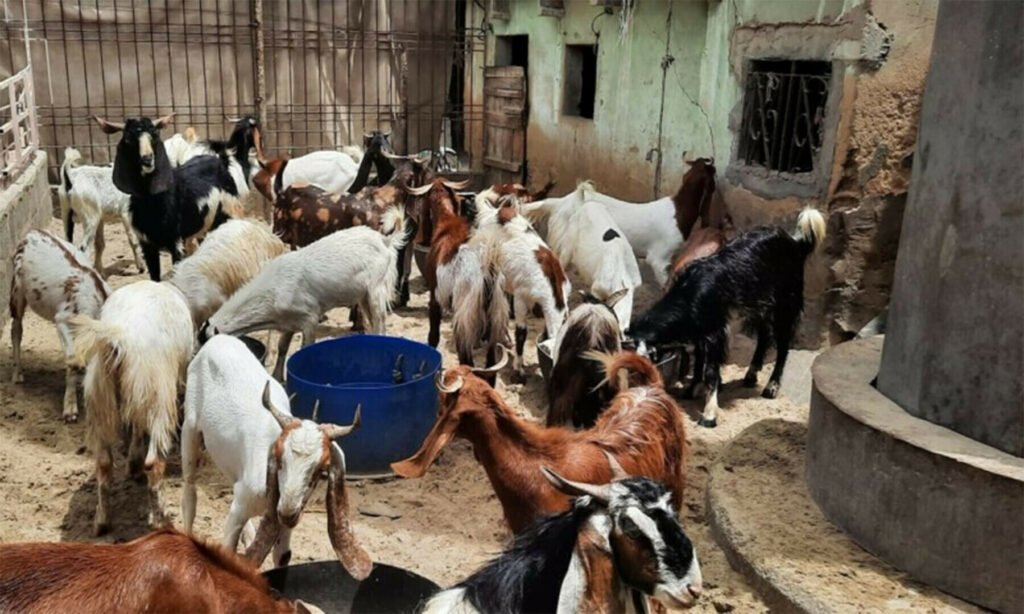
The first major expense is purchasing the breeding or meat-producing herd.
Goat prices in Pakistan vary considerably according to:
- Breed
- Age
- Gender
- Body weight
- Health
- Reproductive status
- Location
- Physical condition
- Bloodline
- Seasonal demand
For example, a healthy commercial goat intended for breeding may cost considerably more than an ordinary young goat.
Instead of planning your business around one advertised price, visit several livestock markets and farms and establish the current price per animal in your target area.
Example: 25-Goat Starter Herd
Suppose your initial herd contains:
- 20 does
- 2 bucks
- 3 young replacement animals
If your average purchase cost is PKR 30,000–50,000 per animal, the livestock component alone could be approximately PKR 750,000–1.25 million.
Higher-quality breeding animals can push this figure significantly higher.
This is why breed selection and purchasing strategy have a major impact on the total goat farm startup cost.
2. Goat Shed Construction Cost
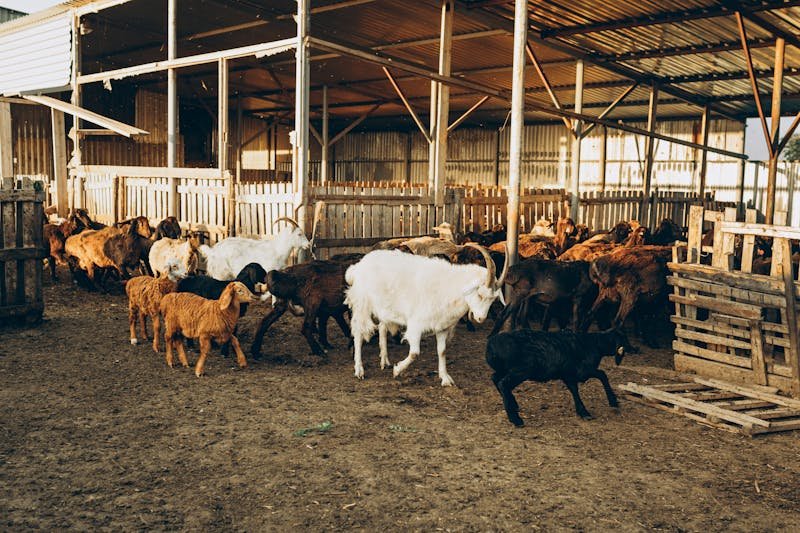
Goats need a dry, clean and well-ventilated shelter.
A commercial goat shed may include:
- Roof
- Posts
- Flooring
- Feeding area
- Watering area
- Drainage
- Ventilation
- Storage space
- Separate kidding area
- Sick-animal isolation area
You do not necessarily need an expensive building when starting a small goat farm.
A basic rural goat shelter can be built using locally available materials, while a commercial operation may require stronger construction and better infrastructure.
Estimated Planning Range
For a small farm, you might allocate approximately PKR 150,000–400,000 for a basic goat shelter and related improvements.
For larger farms, construction can easily reach PKR 500,000 to several million rupees, depending on the size and quality of the facility.
If you already have an unused agricultural building, adapting it for goats can reduce startup expenses.
3. Land Cost
Land can dramatically change the total investment.
If you already own agricultural land, you may not need to include land acquisition in your startup budget.
However, if you need to purchase land, the cost depends heavily on:
- District
- Distance from cities
- Soil quality
- Water availability
- Road access
- Agricultural value
- Local property prices
For this reason, there is no meaningful nationwide fixed figure for the cost of land for a goat farm.
Leasing Can Reduce Startup Investment
A beginner can consider leasing agricultural land instead of buying property.
This approach allows you to preserve capital for:
- Livestock
- Feed
- Housing
- Veterinary care
- Working capital
However, carefully review the lease terms before making a long-term investment in farm infrastructure.
4. Fencing and Farm Security
Goats are active animals and can escape through surprisingly small openings.
A good farm should have appropriate fencing around the grazing or exercise area.
Possible expenses include:
- Wire fencing
- Posts
- Gates
- Boundary walls
- Shade structures
- Internal partitions
For a small farm, basic fencing may cost tens or hundreds of thousands of rupees depending on the available area and materials.
A secure farm can prevent livestock losses and reduce the need for constant supervision.
5. Feed and Fodder Costs
Feed is one of the most important recurring expenses in goat farming.
Goats can consume:
- Green fodder
- Dry fodder
- Leaves
- Crop residues
- Hay
- Concentrate feed
- Minerals
- Salt
The exact feeding program should depend on the goat’s age, breed, body condition, pregnancy status and production purpose.
Grow Your Own Fodder
One way to reduce feed expenses is to grow fodder on your own land.
This can provide:
- Lower long-term feed costs
- More predictable fodder availability
- Better control over feed quality
- Less dependence on market prices
However, growing fodder also involves costs for seed, irrigation, fertilizer, labor and land preparation.
Do not assume home-grown fodder is completely free when calculating profitability.
6. Water System
Clean water is essential for a healthy goat herd.
A small farm may require:
- Water tank
- Troughs
- Pipes
- Pump
- Bore or other water source
- Drainage
The cost depends on whether the farm already has a reliable water connection.
If water is difficult to obtain, investigate the supply before buying animals.
A cheap farm without reliable water can become an expensive operation very quickly.
7. Veterinary and Vaccination Expenses
Animal health should be included in your budget from day one.
Potential veterinary expenses include:
- Vaccinations
- Deworming
- Medicines
- Disease testing
- Pregnancy-related care
- Emergency treatment
- Veterinary visits
- Hoof care
New goats should be monitored carefully after purchase, particularly when introducing animals from different sources.
Maintaining individual animal records can also help you identify recurring health and reproductive problems.
Never build a business plan that assumes every goat will remain healthy throughout the year.
8. Labor Cost
A small family-run goat farm may not need a full-time employee.
As the herd grows, however, you may need workers for:
- Feeding
- Cleaning
- Watering
- Grazing
- Milking
- Kidding supervision
- Health monitoring
- Record keeping
- Security
Labor requirements depend on the farming system.
A grazing-based operation may require different staffing from an intensive commercial goat farm.
Before hiring workers, calculate how many animals one person can realistically manage under your specific system.
9. Goat Breeding Costs
Breeding is where goat farming can become particularly interesting as a business.
A productive breeding herd can generate:
- Kids for sale
- Replacement females
- Breeding bucks
- Meat animals
- Additional herd value
You should maintain records of:
- Mating dates
- Pregnancy
- Kidding
- Number of kids
- Kid mortality
- Growth
- Weaning
- Health
Do not calculate profit simply by multiplying the number of female goats by an assumed number of kids.
Actual reproductive performance varies.
A realistic business plan should account for unsuccessful breeding, infertility, mortality and replacement animals.
10. Feeding and Farm Equipment
A goat farm also needs basic equipment.
Depending on the size of your operation, you may need:
- Feeders
- Water troughs
- Buckets
- Wheelbarrows
- Storage containers
- Weighing equipment
- Cleaning tools
- Medicine cabinet
- Transport equipment
A small farm may start with relatively inexpensive equipment, while a commercial operation can spend significantly more on infrastructure and livestock handling systems.
Buy equipment according to your herd size rather than purchasing everything at once.
Sample Budget for a 25-Goat Farm
Let’s consider a hypothetical small commercial goat farm.
| Expense | Example Budget |
|---|---|
| 25 goats | PKR 750,000–1,250,000 |
| Basic goat shed | PKR 150,000–400,000 |
| Fencing | PKR 75,000–200,000 |
| Feed/fodder reserve | PKR 100,000–200,000 |
| Water system | PKR 40,000–100,000 |
| Equipment | PKR 30,000–75,000 |
| Veterinary/health reserve | PKR 30,000–75,000 |
| Miscellaneous/working capital | PKR 75,000–200,000 |
| Estimated total | PKR 1.25–2.5 million |
This example assumes that you already have access to suitable land.
If you must purchase land, the total investment could be dramatically higher.
The figures should therefore be treated as a planning framework rather than a quotation.
How Much Does a 50-Goat Farm Cost?
A 50-goat commercial operation may require approximately PKR 1.7 million to PKR 3 million or more, excluding land purchase.
The budget may include:
- 50 goats
- Larger housing
- Fencing
- Feed inventory
- Water infrastructure
- Equipment
- Veterinary reserve
- Labor
- Working capital
If you select premium breeding animals, the livestock component alone can exceed the basic estimate.
For a serious commercial operation, it is better to have enough cash available for several months of operating expenses rather than spending your entire budget on livestock.
How Much Does a 100-Goat Farm Cost?
A 100-goat farm represents a significantly larger livestock business.
A reasonable preliminary budget may fall around PKR 3.5 million to PKR 6 million or more, excluding land.
At this scale, management becomes more important.
You may need:
- Dedicated workers
- Better livestock records
- Separate breeding areas
- Kid management facilities
- Feed storage
- Stronger fencing
- Improved water systems
- Veterinary support
- Reliable transportation
At 100 animals, even a small increase in feed costs can have a major effect on annual profitability.
Which Goat Breed Should You Choose?
Breed selection should match your business model and local environment.
Depending on the region and availability, Pakistani farmers may consider breeds such as:
- Beetal
- Kamori
- Teddy
- Nachi
- Barbari
- Dera Din Panah
- Damani
Different breeds have different characteristics relating to:
- Meat production
- Milk production
- Growth
- Reproduction
- Body size
- Climate adaptability
Do not choose a breed simply because it is famous or expensive.
The best goat for your farm is one that fits your local climate, available feed, management system and target market.
Meat Goat Farming vs. Breeding Goat Farming
Your business model will influence how much money you need.
Meat Goat Farming
The objective is to raise goats efficiently for meat markets.
Revenue can come from selling goats according to:
- Live weight
- Age
- Breed
- Seasonal demand
Feed conversion, growth rate and mortality become important financial factors.
Breeding Goat Farm
A breeding operation focuses on producing valuable offspring and replacement stock.
The farmer may sell:
- Pregnant does
- Breeding bucks
- Young breeding animals
- Kids
Quality genetics and reproductive performance become more important.
Goat Milk Farming
Goat milk can also provide an additional revenue stream, although the market is more specialized than conventional cow or buffalo milk.
A farmer should identify buyers before investing heavily in a specialized dairy herd.
Can Goat Farming Be Profitable in Pakistan?
Yes, goat farming can be profitable, but profitability depends on purchase price, feed costs, mortality, reproduction, growth rate and selling price.
Pakistan’s livestock sector provides a substantial market foundation. The latest Economic Survey estimates 91.8 million goats in 2025-26 and 854,000 tonnes of mutton production for the year. ([Finance Division][1])
However, national livestock statistics do not guarantee individual farm profitability.
Your farm’s financial performance will depend on how efficiently you manage the animals.
A simple calculation is:
Net Profit = Livestock Sales + Other Farm Revenue − Total Farm Expenses
Other revenue can include:
- Breeding animals
- Goat milk
- Manure
- Culled animals
- Seasonal livestock sales
How to Reduce Goat Farm Startup Costs
You do not need to build a large commercial facility immediately.
Consider these strategies:
Start with a manageable herd
A 10–25 goat operation can allow beginners to learn livestock management before making a major investment.
Use existing land
If you already have agricultural land, utilize it rather than purchasing expensive property.
Grow fodder
Producing suitable fodder can reduce long-term dependence on commercial feed.
Build gradually
Construct the essential shed first and expand as the herd grows.
Buy healthy animals
A cheap goat with health or reproductive problems can become more expensive than a healthy animal purchased at a higher price.
Keep records
Track every major expense and revenue source.
Good records reveal whether your farm is actually making money.
How Much Working Capital Do You Need?
One of the most overlooked costs in livestock farming is working capital.
Do not invest your entire budget in goats and construction.
Keep cash available for:
- Feed
- Medicine
- Labor
- Transportation
- Repairs
- Water
- Electricity
- Emergency veterinary treatment
A practical strategy is to maintain a reserve covering several months of routine operating expenses.
This gives you greater protection when feed prices increase, animals become sick or market prices temporarily fall.
Is Goat Farming a Good Business for Beginners?
Goat farming can be suitable for beginners, particularly when they start on a manageable scale.
But it is not a passive investment.
Successful farmers need to monitor their animals regularly and understand:
- Nutrition
- Breeding
- Disease prevention
- Housing
- Market prices
- Animal selection
- Farm accounting
The biggest advantage for a beginner is not necessarily starting with hundreds of goats. It is learning how to manage a small herd efficiently and then scaling the business.
Common Mistakes New Goat Farmers Make
Avoid these common mistakes:
- Buying goats without checking their health
- Spending the entire budget on animals
- Ignoring feed costs
- Choosing a breed without studying local conditions
- Building poor-quality housing
- Failing to maintain vaccination records
- Overcrowding the shed
- Ignoring clean water
- Not keeping breeding records
- Depending on one buyer
- Expanding too quickly
- Assuming every female goat will produce the same number of kids
- Calculating profit without including mortality and operating costs
A professional approach to livestock management can make a major difference.
Final Goat Farm Investment Checklist
Before investing, calculate the following:
Livestock: How many goats will you purchase?
Housing: What type of shed do you need?
Land: Will you buy, lease or use existing land?
Feed: Can you grow your own fodder?
Water: Is a reliable water source available?
Healthcare: Have you budgeted for veterinary care?
Labor: Who will manage the animals every day?
Market: Where will you sell your goats?
Working capital: Can you operate for several months without relying on immediate sales?
Expansion: How will you increase the herd after the first production cycle?
If you can answer these questions before purchasing your first goat, you will have a much stronger foundation for your business.
Final Thoughts
So, how much does it cost to start a goat farm in Pakistan?
For a small operation, a realistic planning range can begin around PKR 500,000, while a 25-goat farm may require roughly PKR 1.25–2.5 million, and a 100-goat commercial setup can require PKR 3.5–6 million or more, excluding land. Premium livestock, expensive construction and higher feed requirements can push these figures substantially higher.
Pakistan’s large goat population and established mutton market make goat farming an important livestock opportunity. The latest official estimates put the national goat population at 91.8 million in 2025-26, while estimated goat milk production reached 1.133 million tonnes. ([Finance Division][1])
The smartest approach is to start with a realistic herd size, buy healthy animals, control feed costs, maintain proper records and build a dependable market before expanding.
For farmers and agricultural entrepreneurs, goat farming can become more than a livestock activity—it can develop into a scalable rural business when managed with proper planning and financial discipline.
PakFarming.com provides practical farming, livestock and agricultural business information to help farmers make better decisions and build sustainable farming enterprises.