
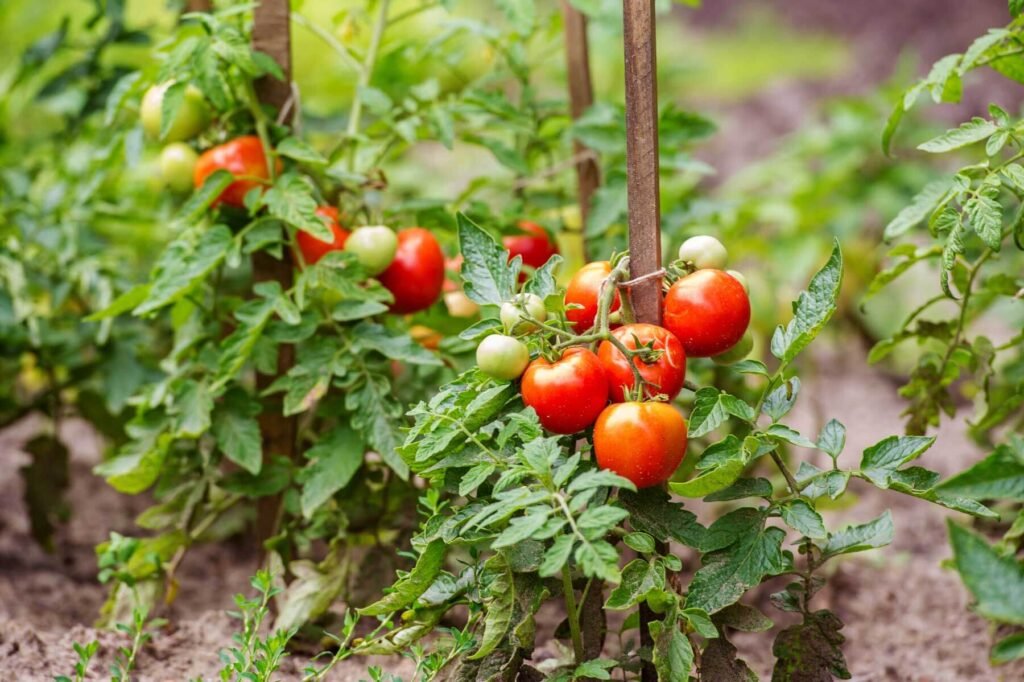
How to Grow Tomatoes in Pakistan: Complete Guide to Tomato Farming from Seed to Harvest
Tomatoes are one of the most widely used vegetables in Pakistani kitchens, making tomato farming in Pakistan an attractive option for commercial growers as well as small farmers and home gardeners. From fresh salads and curries to sauces, ketchup and processed foods, tomatoes have consistent demand in the local market. However, successful tomato cultivation requires more than planting seeds and watering the crop. Farmers need to select suitable varieties, prepare fertile soil, manage irrigation, control weeds and pests, and harvest the fruit at the right stage. Pakistan’s agricultural research system has developed and evaluated several tomato varieties and hybrids for local growing conditions. Punjab Agriculture, for example, lists varieties and hybrids including Salar F1, Naqeeb, Sandal F1, Sundar F1, Ahmar F1, Nadir, Surkhail F1 and Sahara F1, with different growth habits and suitability for open fields or tunnels. ([Agriculture Punjab][1]) This guide explains how to grow tomatoes in Pakistan, including the best planting time, soil preparation, tomato seed selection, nursery raising, transplanting, irrigation, fertilizer, pest management and harvesting. Why Grow Tomatoes in Pakistan? Tomatoes can be a profitable vegetable crop when farmers manage production costs and target the right market window. The crop offers several advantages: Farmers can also target early or off-season tomato production, which may provide better prices when market supply is limited. Punjab’s Vegetable Research Institute reports that tunnel-grown tomatoes can extend the production period and allow farmers to target periods of potentially higher market prices. Its research has also focused on early autumn tomato production and suitable indeterminate hybrids for protected cultivation. ([Agriculture Punjab][2]) Best Time to Grow Tomatoes in Pakistan The best time to plant tomatoes in Pakistan depends on the region, climate, variety and production system. In Punjab, official agriculture recommendations provide different windows for nursery sowing and transplanting. For example, one listed schedule includes nursery sowing in the last half of October followed by transplanting in the last half of November, while another crop window involves nursery sowing around mid-November and transplanting in early February. ([Agriculture Punjab][1]) For tunnel farming, farmers can use different planting schedules to produce tomatoes outside the traditional market season. Tomato Growing Seasons Depending on your location, tomato production can generally be planned around: Do not follow one calendar across the entire country. The ideal planting date in Punjab may not be suitable in Sindh, Balochistan, Khyber Pakhtunkhwa or mountainous areas. Before planting, check local agriculture recommendations and the performance of varieties in your area. 1. Choose the Right Tomato Variety Selecting the right tomato seed is one of the most important decisions a farmer makes. Your choice should depend on: Punjab Agriculture lists both conventional varieties and modern hybrids. For example, Salar F1, Sandal F1, Sundar F1, Surkhail F1 and Sahara F1 are listed as indeterminate types suitable for high-tunnel production, while Naqeeb, Ahmar F1 and Nadir are listed as determinate types suitable for low tunnels or open fields. ([Agriculture Punjab][1]) This distinction matters. Determinate Tomatoes Determinate plants generally have a more compact growth habit and produce their crop over a relatively concentrated period. They can be useful for: Indeterminate Tomatoes Indeterminate plants continue growing and producing over a longer period when conditions are suitable. They are often suitable for: Choose certified seed from a reliable supplier rather than purchasing unknown seed simply because it is inexpensive. 2. Select Suitable Land Tomatoes perform best in fertile, well-drained soil. A suitable field should have: Avoid fields where water remains standing after irrigation or rainfall. Tomato roots need oxygen, and prolonged waterlogging can damage the root system and increase disease problems. 3. Prepare the Soil Before Planting Good soil preparation creates the foundation for healthy tomato plants. Begin by removing weeds and previous crop residues where necessary. Plough or cultivate the field to create a reasonably fine and well-aerated seedbed. Incorporate well-decomposed organic matter where appropriate. A soil test is highly recommended before applying large amounts of fertilizer. Testing helps determine nutrient requirements rather than relying on guesswork. Important nutrients for tomato production include: Avoid applying fertilizer simply because a neighboring farmer uses the same quantity. Nutrient requirements vary according to soil fertility, variety, yield target and previous crop. 4. Raise Healthy Tomato Seedlings Commercial tomato farming commonly begins with nursery production rather than directly sowing large quantities of seed into the field. Use: Protect young seedlings from excessive heat, cold, heavy rain and insects. Overwatering is a common nursery mistake. The growing medium should remain adequately moist without becoming continuously saturated. Healthy seedlings should have: Weak or diseased seedlings can create problems long after transplanting. 5. Transplant Tomato Seedlings Carefully Transplanting is a critical stage in tomato cultivation. Before moving seedlings to the field, gradually expose them to outdoor conditions when necessary. This process helps reduce transplant shock. Prepare planting beds or ridges according to your irrigation and soil conditions. Plant spacing depends on the variety, growth habit, training system and local production recommendations. Avoid planting too closely simply to increase the number of plants per acre. Excessive crowding can reduce airflow and increase humidity around leaves, encouraging disease. Handle seedlings gently and avoid damaging their roots. Water after transplanting as needed to help establish the plants. 6. Give Tomatoes Enough Sunlight Tomatoes are warm-season plants that require good sunlight for strong growth and fruit production. Select a field that receives substantial direct sunlight. Poor light can contribute to: In protected cultivation, manage the tunnel environment carefully. Too much heat can also harm flowering and fruit setting. 7. Irrigate Tomatoes Properly Water management is critical for tomato production. Tomatoes need consistent moisture, particularly during: Avoid extreme fluctuations between very dry soil and excessive irrigation. Irregular watering can contribute to physiological problems such as fruit cracking and inconsistent growth. Drip Irrigation for Tomatoes Drip irrigation can be particularly useful for commercial tomato farming. Punjab Agriculture describes drip irrigation as a system that delivers water and nutrients close to plant roots through emitters. The department reports that high-efficiency irrigation can reduce water use and labor requirements while potentially improving yields